If you have been arrested for Driving While Intoxicated (DWI) in Houston or any part of Texas, and provided a breath sample, you may believe your case is over before it has even begun. Many people assume that a Breathalyzer result is irrefutable proof of guilt and that there is no way to challenge it in court.
Prosecutors often rely heavily on breath test evidence, and police officers frequently tell juries that the machine is scientifically accurate. Fortunately, the reality is much more complicated. Breath testing technology has limitations. Like any scientific instrument, it is only as reliable as the procedures used to operate it, the maintenance performed on it, the assumptions built into its calculations, and the person administering the test.
Even when a Breathalyzer reports an alcohol concentration above the legal limit, that does not necessarily mean the State can prove guilt beyond a reasonable doubt. Every breath test result should be carefully examined by an experienced Houston DWI lawyer before deciding how to proceed with your case. At Benavides Law Group, we understand that successful DWI defense involves much more than simply reviewing a police report.
We analyze every aspect of the investigation, including the legality of the traffic stop, the administration of field sobriety tests, the operation of the breath testing instrument, and the scientific assumptions behind the reported result. This guide explains how breath testing works, why breath test results can be challenged in Texas courts, and the legal defenses that may be available in your case.
Whether you were arrested in Houston, Harris County, or the surrounding communities, understanding the strengths and weaknesses of Breathalyzer evidence is an important first step toward protecting your rights.
Understanding Texas Breath Testing
Before discussing defenses, it is helpful to understand what a breath test actually measures. Contrary to what many people believe, a Breathalyzer does not directly measure the amount of alcohol in a person's blood. Instead, it analyzes alcohol molecules found in a person's breath and then estimates a blood alcohol concentration using a scientific assumption known as the partition ratio.
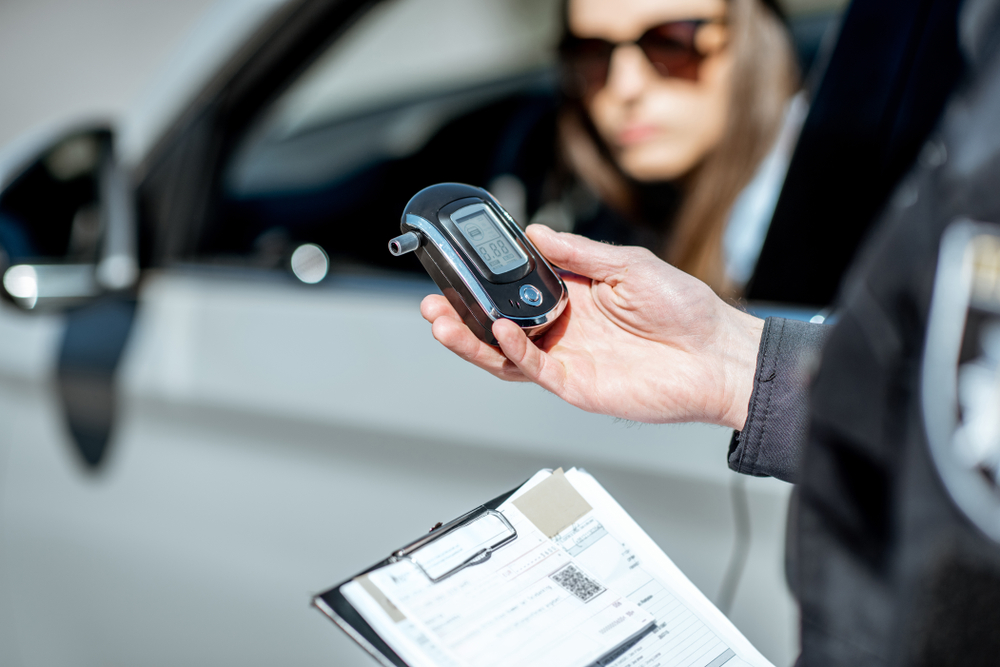
In Texas, most evidentiary breath testing is performed using the Intoxilyzer 9000, the instrument currently approved by the Texas Department of Public Safety for evidentiary alcohol testing. The Intoxilyzer 9000 is considerably more sophisticated than the handheld portable breath testers sometimes used during roadside investigations. The roadside device is generally used only to assist officers during the investigation and is not typically admissible to prove a person's alcohol concentration at trial.
The evidentiary breath test administered at a police station or testing facility is the test prosecutors generally rely upon in court.
Although the Intoxilyzer 9000 uses advanced technology, it is still subject to limitations. Every measurement involves assumptions, calibration requirements, maintenance schedules, and operator responsibilities. Understanding these limitations is often the key to successfully challenging breath test evidence.
Is a Breathalyzer Result Automatic Proof of Guilt in Texas?
One of the biggest misconceptions in DWI cases is that a breath test over 0.08 automatically results in a conviction.
That is not how Texas law works.
The prosecution still bears the burden of proving every element of the offense beyond a reasonable doubt. The defense has the right to challenge:
- The legality of the traffic stop.
- The legality of the arrest.
- The administration of field sobriety tests.
- The administration of the breath test.
- The operation of the Intoxilyzer.
- The reliability of the scientific evidence.
- The qualifications of the breath test operator.
- The maintenance history of the machine.
- Whether the reported alcohol concentration accurately reflected the driver's condition while operating the vehicle.
A breath test result is simply one piece of evidence. It is not immune from challenge.
How the Intoxilyzer 9000 Works
The Intoxilyzer 9000 measures alcohol in deep lung air, often referred to as alveolar breath. The theory behind breath testing is that alcohol present in the bloodstream exchanges with air in the lungs. By measuring alcohol in exhaled breath, the machine estimates the amount of alcohol that was present in the blood.
To produce a result, the instrument relies on infrared spectroscopy. Alcohol molecules absorb infrared light at specific wavelengths. The machine measures how much infrared light is absorbed and uses mathematical formulas to estimate alcohol concentration.
While the scientific principles are well established, the process involves several assumptions that may not hold true for every individual. Small deviations in physiology, temperature, medical conditions, or testing procedures may influence the reported result.
Breath Testing Relies on Assumptions
Many people are surprised to learn that breath testing is based upon assumptions rather than direct measurement.
One of the most significant assumptions involves the partition ratio.
The Intoxilyzer assumes that alcohol in a person's breath exists in a consistent relationship with alcohol in that person's blood.
However, that relationship is not identical for everyone.
Factors that may influence the relationship include:
- Body temperature.
- Lung capacity.
- Gender.
- Age.
- Breathing patterns.
- Individual physiology.
- Medical conditions.
Because the machine estimates blood alcohol concentration rather than directly measuring it, two individuals with identical blood alcohol concentrations could theoretically produce different breath test results.
Likewise, two people producing identical breath test readings may not actually have identical blood alcohol concentrations.
These scientific limitations may become important in close cases.
Why Breath Test Results Can Be Unreliable
A breath test result depends on a series of conditions being met. The factors below explain how the testing procedure, a person's physical condition, and outside influences can affect a reading.
The 15-Minute Observation Period
Before administering an evidentiary breath test, Texas procedures generally require the subject to be continuously observed for at least fifteen minutes.
This observation period serves an important purpose.
The officer or breath test operator watches to ensure the person does not:
- Eat.
- Drink.
- Smoke.
- Vomit.
- Place objects into the mouth.
- Burp or regurgitate in a manner that could introduce mouth alcohol.
Residual alcohol in the mouth may produce artificially elevated breath test results.
If the required observation period is not properly conducted, the reliability of the test may become questionable.
One issue that frequently arises is whether the observation was truly continuous. Officers often multitask by completing paperwork, speaking with other officers, answering phones, or preparing equipment. If the subject was not continuously observed, the defense may challenge whether the required procedures were actually followed.
Mouth Alcohol Can Produce False High Readings
One of the best-known breath testing issues involves residual mouth alcohol.
Breath testing instruments are designed to measure alcohol from deep lung air.
They are not intended to measure alcohol remaining inside the mouth.
Residual alcohol may result from:
- Recently consumed alcoholic beverages.
- Mouthwash containing alcohol.
- Breath sprays.
- Certain medications.
- Acid reflux.
- Burping.
- Vomiting.
- Regurgitation.
If alcohol remains in the mouth immediately before testing, the machine may detect alcohol that is unrelated to the person's true blood alcohol concentration.
Because of this possibility, strict observation procedures are critical.
Failure to follow those procedures may undermine confidence in the reported result.
Acid Reflux and Gastroesophageal Reflux Disease (GERD)
One of the most frequently litigated issues involving breath testing is the effect of acid reflux, also known as gastroesophageal reflux disease (GERD). Millions of Americans suffer from GERD, yet many people are unaware that it may affect the reliability of a breath alcohol test under certain circumstances.
Normally, alcohol measured by a Breathalyzer should come from deep lung air. However, individuals suffering from acid reflux may experience stomach contents traveling back into the esophagus and mouth. If alcohol vapors are carried upward during this process, the breath testing instrument may measure alcohol that originated in the stomach rather than alcohol present in alveolar breath.
This is one reason why the observation period before testing is so important. If a person burps or regurgitates during that period and the officer either fails to notice or ignores it, the reported breath alcohol concentration may not accurately reflect the person's actual blood alcohol level.
Not every person with GERD will have an inaccurate breath test, but the condition is one of many factors an experienced Houston DWI lawyer should investigate when evaluating the reliability of the State's evidence.
Body Temperature Can Affect Breath Test Results
Another factor that many jurors never hear about is body temperature.
The Intoxilyzer assumes a normal body temperature when estimating blood alcohol concentration.
However, if a person's body temperature is elevated due to illness, fever, strenuous exercise, or even natural physiological variation, the amount of alcohol entering the breath may increase.
Studies have suggested that higher body temperatures may produce higher reported breath alcohol concentrations, even when the person's actual blood alcohol concentration remains unchanged.
While temperature alone may not invalidate a breath test, it illustrates an important principle: breath testing is based on assumptions, and human beings do not always fit those assumptions perfectly.
Breathing Patterns Can Influence the Test
Something as simple as the way a person breathes before providing a sample may influence the result.
For example:
- Hyperventilating before testing may lower the reported breath alcohol concentration.
- Holding one's breath before blowing into the machine may increase the reported concentration.
- Heavy physical exertion immediately before testing may also affect the reading.
These differences occur because breath alcohol changes throughout the breathing process.
The Intoxilyzer attempts to collect deep lung air, but variations in breathing can alter the concentration of alcohol present in the sample.
This does not necessarily mean the machine is defective. Instead, it demonstrates that breath testing is affected by human physiology in ways many people do not appreciate.
Radio Frequency Interference
Although modern evidentiary breath testing instruments are designed to minimize outside interference, defense attorneys sometimes investigate whether nearby electronic equipment could have affected the testing process.
Police stations contain numerous electronic devices, including:
- Radios.
- Computers.
- Cell phones.
- Wireless communication equipment.
- Security systems.
Whether radio frequency interference actually affected a particular breath test depends on the facts of the case, the instrument involved, and the available evidence.
Although less common than other defenses, it remains an issue that knowledgeable DWI attorneys consider during their investigation.
Machine, Maintenance, and Operator Problems
A breath test also depends on the instrument and the person operating it. The sections below cover calibration, maintenance records, operator procedures, and certification.
The Machine Must Be Properly Calibrated
Like any scientific instrument, the Intoxilyzer 9000 requires routine maintenance and calibration.
Calibration ensures that the instrument continues producing accurate measurements over time.
If calibration procedures are skipped, performed improperly, or reveal inconsistent performance, questions naturally arise regarding the reliability of the reported results.
Maintenance records may reveal issues such as:
- Failed quality assurance checks.
- Repairs performed shortly before or after the defendant's test.
- Calibration irregularities.
- Software updates.
- Instrument malfunctions.
These records are often reviewed carefully by experienced DWI defense attorneys.
Sometimes they reveal problems that significantly weaken the prosecution's scientific evidence.
Maintenance Records Matter
Many people never realize that breath testing instruments generate extensive maintenance documentation.
These records may include:
- Routine inspections.
- Diagnostic reports.
- Calibration checks.
- Repair histories.
- Software updates.
- Performance verification tests.
An experienced Harris County DWI attorney will often request these records during discovery.
The goal is not simply to determine whether the machine was working on the day of the arrest.
Instead, the attorney examines the instrument's performance over time.
Patterns of recurring problems, repeated repairs, or inconsistent calibration may provide valuable information regarding the reliability of the reported breath alcohol concentration.
Human Error Still Exists
Even though the Intoxilyzer is computerized, human beings remain involved throughout the testing process.
Human error can occur at numerous stages, including:
- Improper observation before testing.
- Incorrect operation of the machine.
- Failure to follow DPS procedures.
- Inadequate documentation.
- Failure to recognize mouth alcohol issues.
- Recording incorrect information.
- Improper maintenance scheduling.
No scientific instrument is completely immune from operator mistakes.
One of the primary goals of DWI defense is determining whether those mistakes occurred and whether they affected the reliability of the evidence.
The Breath Test Operator Must Follow Proper Procedures
Texas breath test operators receive specialized training.
However, training alone does not guarantee that procedures were followed correctly during every investigation.
Operators are expected to comply with established protocols regarding:
- Observation periods.
- Subject instructions.
- Breath sample collection.
- Instrument operation.
- Documentation.
If procedures are not followed, the defense may argue that the resulting breath test should receive little or no weight.
Sometimes body camera footage directly contradicts an operator's testimony regarding how the test was administered.
Instrument Certification
The Intoxilyzer itself must satisfy regulatory requirements before its results are introduced in court.
Questions may arise regarding:
- Whether the instrument was properly certified.
- Whether certification remained current.
- Whether required inspections occurred.
- Whether all regulatory procedures were followed.
These issues are often technical, but they can become significant in cases where the State relies heavily on the breath test to prove intoxication.
Timing: Rising Blood Alcohol and the Gap Between Driving and Testing
Alcohol levels change over time, so when a sample is taken matters. The sections below explain how timing and sample collection can affect what a breath test result shows.
Rising Blood Alcohol Concentration
One of the most effective defenses in many DWI cases involves rising blood alcohol concentration.
Alcohol absorption is a process that occurs over time.
After consuming alcohol, a person's blood alcohol concentration continues increasing until absorption is complete.
This means a person may have been below the legal limit while actually driving but above the legal limit when tested thirty, sixty, or even ninety minutes later.
Consider the following example.
A driver finishes two drinks shortly before leaving a restaurant.
They are stopped twenty minutes later.
The officer conducts field sobriety tests.
The driver is arrested.
Another forty-five minutes pass before the breath test is administered.
If alcohol absorption was still occurring during that time, the reported breath alcohol concentration may not accurately represent the driver's alcohol concentration while operating the vehicle.
Texas law focuses on intoxication at the time of driving, not necessarily at the time of testing.
This timing issue can become particularly important in close cases.
The Time Between Driving and Testing Matters
The longer the delay between driving and testing, the more significant rising alcohol issues may become.
Potential delays include:
- Waiting for additional officers.
- Conducting field sobriety tests.
- Transporting the defendant.
- Completing booking procedures.
- Waiting for an available breath test operator.
Each additional minute may affect how accurately the breath test reflects the person's alcohol concentration while driving.
Defense attorneys frequently construct detailed timelines to determine whether rising alcohol may explain the reported result.
Two Breath Samples Are Usually Collected
Texas breath testing procedures generally require two breath samples.
Collecting two samples helps verify consistency.
If the two reported results differ significantly, questions may arise regarding the reliability of the testing process.
Although identical results are not required, unusual differences between samples may warrant additional investigation. There is a .02 requirement for the two tests for them to be deemed valid.
Breath Test Results Do Not Always Match Actual Impairment
One important point often overlooked in DWI cases is that a reported breath alcohol concentration does not necessarily correspond to a person's level of impairment.
People metabolize alcohol differently.
Factors influencing impairment include:
- Body composition.
- Alcohol tolerance.
- Food consumption.
- Prescription medications.
- Fatigue.
- Medical conditions.
- Individual physiology.
One person may appear significantly impaired at a relatively low alcohol concentration, while another may appear to function normally despite a higher reported level.
The legal issues surrounding intoxication are more complex than many people realize, particularly when the defense challenges the accuracy or reliability of the scientific evidence.
Prosecutors Often Treat Breath Tests as Strong Evidence
There is no question that prosecutors view favorable breath test results as powerful evidence.
Jurors also tend to place significant weight on scientific testing.
For that reason, experienced DWI defense attorneys devote substantial attention to understanding the science behind breath testing rather than simply accepting the reported number at face value.
Scientific evidence can be persuasive, but only when the underlying procedures were properly followed and the testing process was reliable.
Every breath test should be independently evaluated rather than accepted simply because it came from a machine.
How a Houston DWI Lawyer Challenges Breath Test Evidence in Court
One of the biggest misconceptions about DWI cases is that if a breath test exists, it will automatically be admitted into evidence at trial. In reality, prosecutors must satisfy numerous legal requirements before the jury ever hears the breath test result.
Texas courts do not simply accept scientific evidence because it comes from a machine. The prosecution must establish that the testing procedures complied with applicable law, that the instrument was functioning properly, and that the results are sufficiently reliable to be presented to the jury.
If the defense identifies significant legal or scientific problems, the court may limit the evidence, exclude portions of it, or allow extensive cross-examination that substantially reduces its impact.
For this reason, experienced Houston DWI attorneys spend considerable time reviewing discovery, maintenance records, laboratory documentation, and video evidence before trial.
The Officer's Testimony Matters
Although prosecutors often focus on the number reported by the Intoxilyzer, juries usually hear that number through the testimony of a police officer or certified breath test operator.
That means the witness's credibility becomes extremely important.
Defense attorneys frequently examine whether the officer:
- Properly observed the defendant before testing.
- Followed Texas Department of Public Safety procedures.
- Correctly documented the testing process.
- Remembered the events accurately.
- Made statements that conflict with body camera footage.
- Properly explained the operation of the instrument.
If the jury loses confidence in the witness, it may also begin questioning the reliability of the scientific evidence that witness is presenting.
Cross-Examining the Breath Test Operator
Cross-examination is often one of the most effective tools in a DWI trial.
The purpose is not simply to challenge the officer personally. Instead, it is to help jurors understand that scientific evidence must be evaluated carefully rather than accepted blindly.
Common areas of questioning include:
Operator Training
The defense may explore:
- How long ago the officer received certification.
- Whether continuing education has been completed.
- How frequently the officer actually administers breath tests.
- Whether the officer remembers the specific events of the defendant's case or is relying solely on reports.
This helps jurors distinguish between routine procedures and what actually occurred in the individual case.
Observation Period Compliance
As discussed earlier, the required observation period is critical.
Cross-examination may focus on whether the officer:
- Looked away from the defendant.
- Completed paperwork.
- Used a computer.
- Spoke with other officers.
- Answered telephone calls.
- Left the room.
- Could actually see the defendant during the entire observation period.
Even brief interruptions may become significant depending on the circumstances.
Mouth Alcohol Questions for the Operator
The defense may ask whether the officer specifically looked for:
- Burping.
- Regurgitation.
- Vomiting.
- Chewing gum.
- Foreign objects in the mouth.
If the officer cannot confidently answer these questions, jurors may begin questioning whether residual mouth alcohol was adequately ruled out.
Body Camera Footage Can Tell a Different Story
Police reports often summarize events using only a few paragraphs.
Body camera footage, however, may reveal a much more complete picture.
The video sometimes shows that:
- The defendant spoke clearly.
- Instructions were confusing.
- The officer rushed through procedures.
- The defendant repeatedly asked questions.
- The officer became distracted.
- Important events described in the report never occurred.
Video evidence has become one of the most valuable resources available to DWI defense attorneys.
Many breath test cases become significantly stronger for the defense after careful review of body camera recordings.
Breath Tests Do Not Measure Driving Ability
Perhaps the most overlooked issue in many DWI prosecutions is that a breath test measures only one thing: an estimated alcohol concentration.
It does not measure:
- Judgment.
- Reaction time.
- Driving ability.
- Coordination.
- Decision-making.
- Awareness.
- Whether someone actually drove unsafely.
This distinction is important because jurors often assume that a numerical result automatically establishes impairment.
In reality, prosecutors frequently present additional evidence because the breath test alone does not explain how the defendant actually appeared or drove.
Likewise, the defense may present evidence showing that despite the reported breath alcohol concentration, the defendant:
- Drove normally.
- Followed traffic laws.
- Responded appropriately.
- Walked normally.
- Communicated clearly.
- Exhibited no obvious signs of intoxication.
Although Texas law includes a per se definition of intoxication based on alcohol concentration, inconsistencies between the breath test and the defendant's actual behavior may still become important during trial.
The Police Report Is Not Always Accurate
Police officers often prepare reports hours after the arrest.
Like everyone else, they rely on memory.
Mistakes occur.
Common examples include:
- Incorrect times.
- Incorrect locations.
- Inaccurate descriptions.
- Omissions.
- Copy-and-paste errors from previous reports.
- Misstatements regarding the defendant's performance.
Defense attorneys routinely compare:
- Police reports.
- Dispatch records.
- Body camera footage.
- Dash camera recordings.
- Breath test documentation.
- Booking videos.
When inconsistencies appear, they may substantially affect the officer's credibility before a jury.
Constitutional Defenses Still Apply
Even when a breath test appears scientifically reliable, constitutional issues may still determine the outcome of the case.
Potential issues include:
Illegal Traffic Stop
If police lacked reasonable suspicion to stop the vehicle, evidence obtained afterward (including the breath test) may become subject to suppression.
Illegal Arrest
Even after a lawful stop, officers must have probable cause before making an arrest.
If probable cause was lacking, the defense may seek suppression of evidence obtained after the unlawful arrest.
Unlawful Detention
Traffic stops cannot continue indefinitely.
If officers unnecessarily prolonged the detention before obtaining evidence, constitutional issues may arise.
Miranda Violations
Although Miranda warnings are not required during every roadside investigation, statements obtained during custodial interrogation without proper warnings may become inadmissible.
Every DWI case should be evaluated not only from a scientific perspective but also from a constitutional one.
Expert Witnesses Can Help Explain the Science
Breath testing involves chemistry, physiology, mathematics, and instrument design.
Many jurors have little background in these subjects.
Expert witnesses may help explain topics such as:
- Alcohol absorption.
- Alcohol elimination.
- Breath-to-blood ratios.
- Instrument limitations.
- Observation procedures.
- Human physiology.
- Rising blood alcohol concentration.
- Medical conditions affecting breath testing.
The purpose of expert testimony is not necessarily to prove that the machine was wrong.
Rather, it is often to demonstrate that the reported number should not be accepted without carefully considering the underlying assumptions and limitations.
Does a Breath Test Above 0.08 End a Texas DWI Case?
People are often discouraged after learning that their reported breath alcohol concentration exceeded the legal limit.
That reaction is understandable.
However, experienced DWI attorneys know that many successful defenses involve cases with breath tests above 0.08.
The focus is not simply the reported number.
Instead, the defense examines questions such as:
- Was the stop lawful?
- Was the arrest lawful?
- Were constitutional rights protected?
- Was the machine functioning properly?
- Were proper procedures followed?
- Is the reported number scientifically reliable?
- Can the State prove intoxication at the time of driving?
- Does the rest of the evidence actually support the breath test?
Sometimes these questions reveal significant weaknesses in the prosecution's case.
Every Breath Test Case Should Be Investigated Individually
There is no universal defense that applies to every DWI case.
Some cases involve constitutional violations.
Others involve scientific issues.
Still others involve unreliable field sobriety testing, inaccurate officer observations, or alternative explanations for the defendant's behavior.
The only way to determine the strongest defense is through a thorough investigation.
That investigation often includes reviewing:
- Dash camera footage.
- Body camera footage.
- Dispatch records.
- Breath test records.
- Maintenance records.
- Calibration records.
- Observation logs.
- Police reports.
- Witness statements.
- Medical records when appropriate.
The earlier this process begins, the more opportunities there are to preserve important evidence.
Why Early Representation Is So Important
One of the biggest mistakes people make after a Houston DWI arrest is waiting several weeks before contacting an attorney.
Evidence does not remain available forever.
Video recordings may eventually be deleted pursuant to retention policies.
Witness memories fade.
Physical evidence becomes more difficult to investigate.
Maintenance records may become harder to obtain.
By hiring a Houston DWI lawyer early, you allow your attorney to begin preserving evidence while it is still available.
Early preparation also allows sufficient time to evaluate potential motions, consult with experts when necessary, and develop a comprehensive defense strategy.
Why Choose Benavides Law Group for Your Houston DWI Defense
A breath test result does not define your case, and it should never be viewed as an automatic conviction. At Benavides Law Group, we understand that every DWI investigation deserves careful scrutiny. Our approach is to thoroughly examine every stage of the State's case, from the initial traffic stop through the administration of the breath test and beyond.
We evaluate whether law enforcement complied with constitutional requirements, whether field sobriety tests were properly administered, whether the Intoxilyzer 9000 was operating as required, and whether the scientific evidence truly supports the prosecution's allegations.
Because DWI defense is a primary focus of our practice, we understand both the legal and scientific issues that frequently arise in breath test cases. Whether your case involves an alleged breath alcohol concentration above the legal limit, questions about the observation period, machine maintenance, rising blood alcohol, or constitutional violations, we work to identify every available defense and hold the State to its burden of proof.
Contact a Houston DWI Attorney About Your Breath Test Case

If you have been arrested for DWI in Houston, Harris County, Pasadena, Katy, Cypress, Spring, Humble, Pearland, Baytown, Sugar Land, or the surrounding areas, do not assume that a breath test determines the outcome of your case. Every case deserves an independent review by an experienced Houston DWI attorney. There are often issues that are not apparent until the evidence is carefully examined.
If you are facing DWI charges and have questions about your rights or the reliability of your breath test, contact Benavides Law Group at 713-222-2828 to schedule a confidential consultation. The sooner your attorney begins investigating your case, the greater the opportunity to preserve evidence, identify weaknesses in the prosecution's case, and build the strongest defense possible.