If you have been arrested for Driving While Intoxicated (DWI) in Texas, it is easy to assume that the State already has enough evidence to convict you. Many people believe that once they have been arrested, especially if they submitted to a breath or blood test, there is little that can be done to fight the case. Fortunately, that is not how the criminal justice system works.
Every person charged with DWI is presumed innocent unless the State proves guilt beyond a reasonable doubt. That burden is much higher than many people realize. Prosecutors cannot simply tell a jury that a police officer believed someone was intoxicated. They must present reliable, admissible evidence proving every element of the offense. Likewise, law enforcement officers must follow constitutional requirements throughout the investigation. If they fail to do so, critical evidence may be excluded from trial or the case may even be dismissed.
At Benavides Law Group, we have represented clients facing DWI charges throughout Houston, Harris County, and the surrounding areas. One of the most common questions we receive is, "What defenses are available in my case?" The answer depends entirely on the facts. There is no universal defense that works in every DWI prosecution. Instead, experienced Houston DWI lawyers carefully examine every aspect of the State's investigation to identify weaknesses, inconsistencies, constitutional violations, and scientific issues that may create reasonable doubt.
This guide explains many of the most common defenses used in Texas DWI cases and why hiring an experienced Houston DWI attorney as early as possible can significantly improve your chances of obtaining a favorable outcome.
Understanding What the State Must Prove
Before discussing defenses, it is important to understand what prosecutors are actually required to prove. Under Texas law, a person commits the offense of Driving While Intoxicated if they operate a motor vehicle in a public place while intoxicated. Although that definition appears simple, each part of it has legal significance. Prosecutors must establish that the defendant was operating a motor vehicle, that the operation occurred in a public place, and that the defendant was intoxicated at the time of driving. If the State cannot prove even one of those elements beyond a reasonable doubt, the jury must return a verdict of not guilty. Many successful DWI defenses focus on one or more of these required elements rather than attempting to explain away every piece of evidence. Sometimes the issue is whether the defendant was actually operating the vehicle. In other cases, the dispute centers on whether intoxication existed at the precise time of driving rather than an hour later after testing occurred. Every DWI case begins with understanding exactly what the prosecution must prove.

Every DWI Case Is Different
One of the biggest mistakes people make is comparing their case to someone else's. They may have a friend who was convicted after blowing a .09, while another person had a case dismissed despite a reported .12 breath test. Those outcomes do not necessarily conflict. Every DWI prosecution presents different facts, different witnesses, different police officers, different judges, different prosecutors, different scientific evidence, and different constitutional issues. An experienced Harris County DWI lawyer does not simply ask what someone's blood alcohol concentration was. Instead, the attorney evaluates the entire investigation from beginning to end. Even cases involving high blood alcohol concentrations can have viable legal defenses if constitutional violations occurred or if the evidence itself is unreliable.
Illegal Traffic Stops
One of the strongest defenses in many DWI cases involves challenging the legality of the initial traffic stop. Police officers cannot stop a vehicle merely because they have a hunch that someone might be intoxicated. The Fourth Amendment requires reasonable suspicion that a crime or traffic violation has occurred. This means the officer must be able to identify specific, articulable facts that justified stopping the vehicle. Examples may include speeding, failing to maintain a single lane, running a red light, driving without headlights, or committing another traffic violation. Sometimes officers claim they observed weaving within a lane, but video footage later shows perfectly normal driving. Other times, the alleged violation never actually occurred. If the traffic stop was unlawful, important evidence obtained afterward—including field sobriety tests, admissions, breath tests, and blood tests—may be subject to suppression. Without that evidence, prosecutors may have little or no case remaining.
Lack of Reasonable Suspicion
Closely related to an illegal traffic stop is the issue of reasonable suspicion. Officers often describe observations such as "driving suspiciously" or "appeared impaired," but those conclusions alone are insufficient. Courts require objective facts supporting the stop. Simply driving late at night, leaving a restaurant, leaving a sporting event, or driving in an area with numerous bars does not automatically justify a traffic stop. Likewise, momentarily touching a lane marker or making a perfectly legal turn is not necessarily evidence of criminal activity. Defense attorneys frequently examine dash camera footage, body camera footage, dispatch records, and police reports to determine whether the officer's stated justification actually matches what occurred.
Lack of Probable Cause to Arrest
Even if the initial traffic stop was lawful, officers still need probable cause before placing someone under arrest for DWI. During the investigation, officers gather information through observations, conversations, and standardized field sobriety tests. Sometimes that evidence simply does not establish probable cause. A driver may smell of alcohol but show no signs of intoxication. They may admit to having one or two drinks several hours earlier while exhibiting normal speech, balance, and coordination. An arrest cannot be based solely on the fact that someone consumed alcohol. Drinking is legal for adults. The issue is whether alcohol caused the loss of the normal use of mental or physical faculties or whether the person's alcohol concentration met the statutory limit. If probable cause was lacking, the arrest itself may be challenged.
The Officer Misinterpreted Normal Behavior
Many so-called signs of intoxication have perfectly innocent explanations. Police officers receive training to look for clues that may indicate impairment, but those clues are not exclusive to intoxication. Nervousness, fatigue, allergies, anxiety, medical conditions, and ordinary human behavior can produce many of the same observations. For example, an officer may report bloodshot eyes as evidence of intoxication. However, bloodshot eyes can result from allergies, contact lenses, lack of sleep, smoke exposure, or long work hours. Likewise, slurred speech may actually reflect a speech impediment, dental work, fatigue, or a naturally soft-spoken manner of speaking. Even fumbling for documents during a traffic stop may be explained by stress. Most people become nervous when confronted by law enforcement, regardless of whether they have consumed alcohol. A skilled DWI defense attorney examines whether the officer drew conclusions that were unsupported by the surrounding circumstances.
Challenging the Standardized Field Sobriety Tests
Standardized Field Sobriety Tests are often portrayed as highly accurate indicators of intoxication, but their reliability depends heavily on proper administration. The National Highway Traffic Safety Administration (NHTSA) developed standardized procedures that officers are expected to follow. If those procedures are ignored, the reliability of the tests decreases significantly. The three standardized tests are the Horizontal Gaze Nystagmus test, the Walk-and-Turn test, and the One-Leg Stand test. Each has strict administration guidelines. Officers must provide proper instructions, demonstrate the tests correctly, and score only the clues recognized by NHTSA. Small deviations from these procedures can substantially affect the results. Additionally, many people perform poorly for reasons unrelated to alcohol, including age, weight, physical injuries, balance disorders, neurological conditions, or uneven testing surfaces. Simply failing a field sobriety test does not automatically mean someone was intoxicated.
Problems with the Horizontal Gaze Nystagmus (HGN) Test
The Horizontal Gaze Nystagmus (HGN) test is often considered by law enforcement to be the strongest of the three standardized field sobriety tests. During the test, the officer asks the driver to follow a stimulus, usually a pen or small flashlight, with only their eyes while keeping their head still. The officer looks for involuntary jerking of the eyes, known as nystagmus, which can become more pronounced after alcohol consumption.
Although officers frequently testify that the HGN test is highly reliable, its accuracy depends almost entirely on proper administration. NHTSA requires officers to hold the stimulus at the proper distance from the subject's face, move it at a specific speed, check for equal pupil size and resting nystagmus before beginning, and perform the test under appropriate conditions. If any of these procedures are not followed, the results become less reliable.
There are also numerous medical conditions unrelated to alcohol that can produce nystagmus or similar eye movements. Inner ear disorders, certain neurological conditions, previous head injuries, eye muscle disorders, some prescription medications, and naturally occurring nystagmus may all affect the results. An experienced Houston DWI attorney will often compare the officer's testimony with the body camera footage to determine whether the HGN test was administered according to NHTSA standards.
Problems with the Walk-and-Turn Test
The Walk-and-Turn test requires a person to take nine heel-to-toe steps along a straight line, turn using a series of small steps, and return in the same manner.
At first glance, the test appears simple.
In reality, it is a divided-attention exercise that requires a person to simultaneously listen to instructions, remember those instructions, maintain balance, count steps, and perform specific physical movements.
Many completely sober people struggle with these tasks.
Numerous factors can affect performance, including:
- Age
- Obesity
- Knee injuries
- Hip problems
- Back pain
- Poor footwear
- Uneven pavement or gravel
- Rain
- Wind
- Fatigue
- Anxiety
For example, many Harris County DWI arrests occur after midnight. A nurse finishing a twelve-hour shift or a refinery worker leaving an overnight shift may naturally appear tired or have difficulty balancing, even though they are completely sober.
When officers fail to consider these alternative explanations, they may incorrectly conclude that alcohol caused the person's performance.
Problems with the One-Leg Stand Test
The One-Leg Stand test requires the driver to raise one foot approximately six inches off the ground while counting aloud until instructed to stop.
Again, this sounds easy.
However, standing on one leg for approximately thirty seconds is not a task most adults perform during normal daily life.
Numerous factors may influence performance, including:
- Age.
- Weight.
- Prior ankle injuries.
- Knee surgeries.
- Back conditions.
- Vestibular disorders.
- Balance problems.
- Pregnancy.
- Footwear.
- Uneven surfaces.
Many people instinctively put their foot down simply because they believe they have counted long enough or because they become uncomfortable.
That does not necessarily indicate intoxication.
A thorough review of body camera footage often reveals that the officer exaggerated the driver's performance or counted clues that should not have been counted under NHTSA standards.
Improper Administration of Field Sobriety Tests
One of the most common defenses in Texas DWI cases is that the field sobriety tests were simply not administered correctly.
Police officers receive specialized training, but they are human.
Mistakes happen.
Examples include:
- Giving incomplete instructions.
- Demonstrating the test incorrectly.
- Interrupting the subject while performing the test.
- Administering the tests on an unsafe surface.
- Conducting the tests in poor lighting.
- Failing to ask about medical conditions.
- Miscounting clues.
- Recording observations inaccurately.
These mistakes matter because prosecutors frequently rely on field sobriety tests to establish probable cause and persuade juries that the defendant was intoxicated.
If the tests themselves are unreliable, much of the State's case may become substantially weaker.
Medical Conditions Can Mimic Intoxication
One of the most overlooked defenses in DWI cases involves underlying medical conditions.
Many illnesses produce symptoms that closely resemble alcohol impairment.
Some examples include:
Diabetes
A diabetic experiencing hypoglycemia may appear confused, unsteady, sweaty, or disoriented.
Without proper evaluation, an officer may mistakenly believe these symptoms are caused by alcohol.
Neurological Disorders
Conditions such as multiple sclerosis, Parkinson's disease, traumatic brain injuries, and certain seizure disorders may affect balance, coordination, speech, and eye movements.
These symptoms can easily be mistaken for intoxication.
Vertigo
Individuals suffering from vertigo or inner ear disorders often experience dizziness and balance problems.
A person with vertigo may struggle on field sobriety tests despite having consumed no alcohol whatsoever.
Fatigue
Many people arrested for DWI are driving late at night after working long shifts.
Fatigue alone can cause:
- Bloodshot eyes.
- Slow responses.
- Poor coordination.
- Difficulty concentrating.
- Yawning.
- Slowed speech.
Those observations should not automatically be attributed to alcohol.
Anxiety
Being stopped by police is stressful.
Even innocent drivers frequently become nervous.
Anxiety may lead to:
- Trembling hands.
- Rapid speech.
- Forgetfulness.
- Difficulty following instructions.
- Shaking.
- Increased heart rate.
An experienced DWI defense lawyer looks beyond the officer's conclusions to determine whether innocent explanations better account for the observed behavior.
Breath Test Defenses
Many people believe that a breath test is definitive proof of intoxication.
It is not.
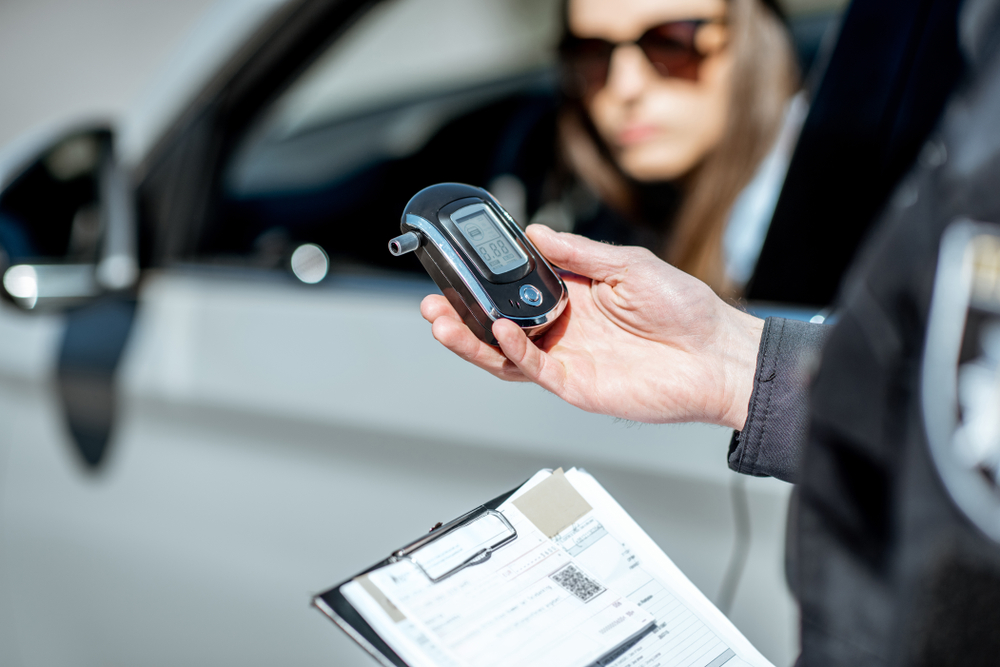
Breath testing devices estimate blood alcohol concentration by analyzing alcohol present in a person's breath.
Like any scientific instrument, they require proper maintenance, calibration, operation, and interpretation.
Numerous issues may affect the accuracy of a breath test.
The Machine Was Not Properly Maintained
Breath testing instruments require routine maintenance and calibration.
If maintenance records reveal irregularities, missed inspections, or equipment malfunctions, the reliability of the reported result may be called into question.
Defense attorneys frequently review maintenance records, quality assurance documents, and calibration histories to determine whether the instrument was functioning properly.
Radio Frequency Interference
Although modern breath testing equipment has improved significantly, certain electronic devices may interfere with testing under specific circumstances.
Whether interference occurred depends on the facts of the case and the equipment used.
This is another area where maintenance records and expert analysis may become important.
Mouth Alcohol
Breath testing devices are intended to measure alcohol coming from deep lung air.
They are not designed to measure alcohol remaining in the mouth.
Residual mouth alcohol may result from:
- Recently consumed alcoholic beverages.
- Certain mouthwashes.
- Some medications.
- Burping or regurgitation.
- Acid reflux.
For this reason, officers are generally required to observe the subject for a specified period before administering the breath test.
If observation procedures are not followed, residual mouth alcohol may artificially increase the reported result.
GERD and Acid Reflux
Individuals suffering from gastroesophageal reflux disease (GERD) or chronic acid reflux may experience alcohol vapors traveling from the stomach back into the mouth.
Depending on the circumstances, this may affect breath testing.
Medical records, expert testimony, and careful review of testing procedures may become important in these cases.

Rising Blood Alcohol Concentration
One of the most effective defenses in certain DWI cases involves the concept of rising blood alcohol.
Alcohol is not absorbed instantly.
After drinking, alcohol continues entering the bloodstream over time.
A driver may have been below the legal limit while actually driving but above the legal limit by the time a breath or blood sample was obtained thirty, sixty, or ninety minutes later.
This issue often arises when:
- The driver consumed alcohol shortly before leaving.
- Significant time passed before testing.
- The prosecution cannot establish the precise time of driving.
The legal issue is not whether the driver was intoxicated when tested.
The issue is whether the driver was intoxicated while operating the motor vehicle.
That distinction can make an enormous difference.
Blood Test Defenses
Many people assume blood testing is flawless. It is not. Blood testing involves numerous steps, each of which presents opportunities for error.
Potential issues include:
- Improper collection procedures.
- Contamination.
- Incorrect preservatives.
- Improper storage.
- Chain of custody issues.
- Laboratory errors.
- Sample misidentification.
- Fermentation.
- Analyst mistakes.
Each step should be carefully examined by an experienced Texas DWI lawyer.
A blood test result is only as reliable as the procedures used to obtain and analyze the sample.
Challenging the Blood Search Warrant
In many Texas DWI cases, particularly when a driver refuses to provide a breath sample, law enforcement officers seek a search warrant authorizing the collection of a blood sample. Many people mistakenly believe that once a judge signs a warrant, the blood evidence is beyond challenge. That is simply not true.
A search warrant must satisfy both the United States Constitution and Texas law. The officer requesting the warrant must present sufficient facts establishing probable cause. Those facts must be truthful, complete, and legally adequate. If the affidavit supporting the warrant contains false statements, material omissions, or fails to establish probable cause, the defense may be able to challenge the validity of the warrant.
Additionally, officers must execute the warrant in a reasonable manner. Even when a warrant is valid, constitutional issues may arise if the blood draw itself is performed improperly or outside the scope of the warrant.
An experienced Houston DWI lawyer carefully reviews not only the blood test results but also the warrant application, supporting affidavit, and execution of the warrant to determine whether constitutional violations occurred.
Problems with Chain of Custody
Blood evidence is only as reliable as the procedures used to preserve it.
From the moment blood is drawn until it is analyzed in a laboratory, numerous individuals may handle the sample. Every transfer should be documented.
This process is known as the chain of custody.
The purpose of the chain of custody is to demonstrate that:
- The blood tested actually belonged to the defendant.
- The sample was not contaminated.
- The sample was not mixed with another person's blood.
- The sample was properly preserved.
- The sample remained secure throughout the testing process.
If there are unexplained gaps in the chain of custody, the defense may argue that the State cannot prove the sample tested was the same sample collected from the defendant.
Although minor clerical errors do not automatically result in dismissal, significant chain-of-custody problems can undermine confidence in the laboratory results.
Laboratory Errors
Crime laboratories are staffed by trained professionals, but they are not immune from mistakes.
Laboratory analysts work with thousands of samples each year. Human error can occur at virtually every stage of the testing process.
Potential issues include:
- Sample mix-ups.
- Clerical mistakes.
- Instrument malfunctions.
- Improper calibration.
- Cross-contamination.
- Data entry errors.
- Mislabeling.
- Incorrect calculations.
Defense attorneys frequently examine laboratory records, quality assurance documents, and analyst notes to determine whether mistakes occurred during testing.
In some cases, laboratories have acknowledged errors that directly affected reported blood alcohol concentrations.
Fermentation of Blood Samples
Proper preservation of blood samples is critical.
If blood is not stored appropriately, fermentation can occur.
Fermentation may produce alcohol within the sample itself, potentially increasing the reported alcohol concentration.
Proper collection tubes contain preservatives intended to minimize this risk, but improper storage, delays in processing, or collection errors may still become relevant issues.
A knowledgeable DWI defense attorney understands when these scientific issues warrant further investigation by an independent expert.
Officer Credibility
Many DWI cases ultimately come down to credibility.
Police officers routinely testify about what they observed during the investigation.
Jurors often expect officers to remember events accurately.
However, officers are human.
Memory fades.
Reports sometimes contain inaccuracies.
Body camera footage occasionally contradicts written reports.
Examples include:
- Claiming a driver stumbled when the video shows otherwise.
- Reporting slurred speech that cannot be heard on the recording.
- Describing confusion when the driver's answers were appropriate.
- Claiming poor balance despite stable performance on video.
- Omitting statements that favor the defendant.
Cross-examination frequently focuses on these inconsistencies.
Even small discrepancies can affect how jurors evaluate the officer's credibility.
Body Camera and Dash Camera Evidence
Video evidence has transformed DWI defense.
Years ago, juries often relied almost entirely on an officer's testimony.
Today, many investigations are recorded from beginning to end.
Body camera and dash camera footage frequently reveal important details that are not apparent from the police report.
The video may show:
- Normal driving before the stop.
- Clear speech.
- Appropriate responses.
- Good balance.
- Proper coordination.
- Cooperative behavior.
- Poor lighting conditions.
- Officer mistakes during field sobriety testing.
Sometimes the prosecution's strongest witness becomes the video itself.
When jurors can watch the interaction with their own eyes, they are often better equipped to decide whether the officer's conclusions were justified.
One reason it is important to hire a Houston DWI attorney early is to ensure that video evidence is preserved before it is lost or deleted pursuant to retention policies.
The Driver Was Not Actually Operating the Vehicle
Not every person found inside a vehicle is guilty of DWI.
Texas law requires proof that the defendant was operating a motor vehicle.
Operation is a legal issue that depends on the facts of each case.
For example, officers sometimes encounter individuals who are:
- Sleeping inside parked vehicles.
- Sitting in the driver's seat while waiting for a ride.
- Resting after realizing they should not drive.
- Parked with the engine off.
- Parked in a private parking lot.
Whether these circumstances constitute "operation" depends on numerous factors.
Simply being inside a vehicle after consuming alcohol does not automatically satisfy this legal requirement.
The State Cannot Prove the Time of Driving
One overlooked issue involves proving when the defendant was actually driving.
Imagine an officer arrives at the scene of a minor accident.
The driver is standing outside the vehicle.
No one actually witnessed the driving.
An hour later, a blood sample reveals an alcohol concentration above the legal limit.
The prosecution still must prove that the defendant was intoxicated while operating the vehicle.
If significant time passed before law enforcement arrived, questions may arise regarding:
- When the person last drove.
- Whether alcohol was consumed afterward.
- Whether alcohol concentration changed over time.
- Whether the prosecution can establish intoxication at the relevant moment.
Timing issues can create substantial reasonable doubt in certain cases.
Constitutional Violations During the Investigation
The Constitution provides important protections that apply during criminal investigations.
When officers violate those protections, courts may suppress evidence obtained as a result of the violation.
Potential constitutional issues include:
Unlawful Detention
A traffic stop cannot continue indefinitely.
Once the purpose of the stop has been completed, officers generally must allow the driver to leave unless additional reasonable suspicion develops.
Prolonging a detention without legal justification may violate the Fourth Amendment.
Miranda Issues
Although not every roadside interaction requires Miranda warnings, statements obtained during custodial interrogation without proper warnings may become subject to challenge.
Whether Miranda applies depends on the specific circumstances of the encounter.
Illegal Searches
Officers may not search vehicles without legal authority.
Depending on the facts, evidence obtained during an unlawful search may be suppressed.
Constitutional litigation is often one of the most important aspects of an effective DWI defense.
Witness Testimony Can Support the Defense
Police officers are not always the only witnesses.
Sometimes other individuals observed the defendant shortly before driving.
Potential witnesses may include:
- Restaurant employees.
- Bartenders.
- Friends.
- Family members.
- Coworkers.
- Passengers.
- Other motorists.
These witnesses may testify that the defendant:
- Appeared sober.
- Spoke normally.
- Walked normally.
- Consumed little or no alcohol.
- Was not the driver.
- Behaved appropriately.
Independent witnesses can provide valuable context that is missing from the police investigation.
Expert Witnesses
Many DWI cases involve scientific evidence that is difficult for jurors to evaluate without expert assistance.
Depending on the issues involved, the defense may consult experts in areas such as:
- Toxicology.
- Pharmacology.
- Breath testing.
- Blood alcohol analysis.
- Retrograde extrapolation.
- Field sobriety testing.
- Accident reconstruction.
- Human physiology.
Expert testimony can help jurors understand the limitations of the State's evidence and provide alternative explanations for disputed results.
Refusing a Breath or Blood Test Is Not an Admission of Guilt
Many jurors wonder why someone refused chemical testing.
The answer is often more complicated than the prosecution suggests.
Some individuals refuse because:
- They distrust the testing process.
- They have been advised of their legal rights.
- They fear needles.
- They have medical conditions.
- They are confused by the situation.
- They simply choose to exercise their legal options.
While a refusal may have legal consequences, it does not automatically establish intoxication.
The prosecution must still prove every element of the offense beyond a reasonable doubt.
Why Thorough Preparation Wins Cases
Successful DWI defense rarely depends on a single dramatic moment.
Instead, favorable outcomes are usually the result of meticulous preparation.
An experienced Harris County DWI lawyer will often spend countless hours:
- Reviewing every second of body camera footage.
- Reviewing dash camera recordings.
- Reading dispatch logs.
- Examining laboratory records.
- Investigating maintenance records for breath testing instruments.
- Researching applicable case law.
- Interviewing witnesses.
- Filing pretrial motions.
- Preparing for suppression hearings.
- Cross-examining expert witnesses.
Many cases become significantly stronger for the defense long before a jury ever enters the courtroom because weaknesses in the State's evidence have been identified and thoroughly developed.
There Is No "Guaranteed Defense"
Perhaps the most important point in this guide is this: no attorney can ethically promise that a particular defense will result in a dismissal or acquittal.
Every DWI case is different.
The best defense depends on the unique facts of your case, the available evidence, the applicable law, and the decisions made throughout the litigation process.
Be cautious of anyone who claims they already know how your case will end after only a brief conversation.
A qualified attorney should first review the evidence before offering an opinion regarding possible defenses and likely outcomes.
Why Hiring an Experienced Houston DWI Lawyer Matters

A DWI conviction can have consequences that extend well beyond the courtroom. Depending on the facts of the case, you may face jail time, substantial fines, driver's license consequences, increased insurance premiums, ignition interlock requirements, probation conditions, and a permanent criminal record. For many professionals, a conviction can also affect employment opportunities and professional licensing.
At Benavides Law Group, we understand that no two DWI cases are alike. We take the time to thoroughly investigate every case, analyze the evidence, identify constitutional issues, and develop a defense strategy tailored to each client's circumstances. Whether your case involves a questionable traffic stop, disputed field sobriety tests, breath or blood testing issues, or complex scientific evidence, our goal is to hold the State to its burden of proof.
If you have been arrested for DWI in Houston, Harris County, or the surrounding communities—including Pasadena, Katy, Cypress, Pearland, Spring, Humble, Baytown, Sugar Land, and The Woodlands—the decisions you make now can have a significant impact on your future. Speaking with an experienced Houston DWI attorney as soon as possible allows important evidence to be preserved and gives your defense the strongest possible foundation.
A DWI arrest is not the same as a conviction. There are often defenses available that are not immediately obvious, and many cases are far more defensible than clients initially believe. Understanding your rights, preserving critical evidence, and working with an attorney who regularly handles DWI cases can make a meaningful difference in the outcome of your case. If you have questions about your arrest or would like to discuss potential defenses available in your situation, contact Benavides Law Group at 713-222-2828 to schedule a confidential consultation.